
From the Desk of Tom Grovenstein
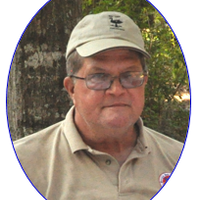
Summer Newsletter 2026
Greetings Cousins!
As we put July 4th and the celebration of
Independence Day behind us, I want to leave you with some food for thought.
Many years before 1776 and the Declaration of Independence, a small group of religious exiles left a world that did not want them and journeyed to unknown and very different shores. Our very own Salzburger descendants of the 1730s laid the foundations for what America would stand for in the 1770s.
Look at the comparisons: Here at Ebenezer, our ancestors established churches and schools, cared for orphans, kept detailed records, farmed the land, organized the community for the common good, and learned to govern their own affairs and work together.
No, the Salzburgers did not write the Constitution or the Declaration of Independence. But the experiences these first Georgians had provided a blueprint for what came later. We came seeking freedom of conscience and, within two generations, became citizens of a new nation whose founding documents helped protect that freedom. That is the remarkable connection between the Salzburgers of Ebenezer, Georgia, and the Declaration of Independence and the United States Constitution.
At this point, I want to extend a very special invitation to each of you to join us for Heritage Day! On September 7th, Labor Day, we are putting together a number of events that celebrate all that makes us—and that means you—Salzburgers.
Please join us as we share the history of a great people with the greater community. All are welcome, and everyone is needed to help make this the best Heritage Day ever!
Oh, and I extend a special invitation to come visit me at the Loest Research and Genealogy Library. If you haven’t already, come see me and let’s start your very own family tree!
Thank you, and I hope to see you on September 7th!
Spring Newsletter 2026
Greetings Cousins!
First, I want to wish a very big happy birthday to America! For 250 years, America has stood as a great beacon for
democracies around the world. The Founding Fathers provided the world with a document that has truly stood the test of time. However, another remarkable event took place even further back in history. In 1734, 42 years before the signing of the Declaration of Independence, a small group of men, women, and children arrived on the shores of Georgia and made the arduous trek inland to a place we now know as Ebenezer.
These 73 hardy souls left Dover, England, on January 8, 1734, aboard the ship Purysburg, bound for the New World and religious freedom. After 104 days, the Salzburgers finally arrived off the shores of Charles Towne, South Carolina. It wasn’t until March 12 that the group was welcomed to
Savannah by General James Oglethorpe. Cannons fired to welcome these travelers, and a meal of “good rice soup” was served. After a site was
selected inland on March 17, the name “Ebenezer” (Stone of Help) was
chosen, and between March 21 and April 7, the group of Lutheran settlers arrived at their new home on the banks of Ebenezer Creek, just upstream from the Savannah River.
We celebrate this time because each of us who are descendants of these remarkable settlers owes so much to their bravery, hardiness, inventiveness, and, above all, their faith in God. Here at the Loest
Research Library, we strive to provide all who visit us in 2026 with the tools to discover their own history and the names of the ancestors who made it possible for them to be who they are today.
On this semiquincentennial birthday of America, let us remember this small group of Lutherans who left the shores of the Old World to begin a new life in the New World. We hope you have an amazing birthday, America!
Summer Newsletter 2024
The Loest Research Library (LRL) has an exciting announcement to make that truly involves each one of us. We are embarking on a long-range project: “The Salzburger Oral History Project.” I alluded to this endeavor in the Winter 2023 newsletter, but now I hope to put everyone to work bringing it to life. What will make our project exciting to young and old alike is that everyone is needed to make this work at the optimum level.
As we get older, most of us become more interested in our families’ histories. Fortunately, Salzburger descendants have a good start through the availability of the LRL. Yet, the LRL needs much more historical information to fill in many gaps. As our parents, grandparents and great grandparents age and pass into history, we as a people lose huge volumes of historical information. Our Oral History Project can bring this information back from possible extinction.
Over the next year, we hope that you readers will use the information that LRL provides, as well as information that you find on the internet, to interview those in your family who are older and who remember information vital for long range history gathering. All that we are is because of those who came before us; having an oral history is essential for long range historical perspective. We want to put into future generations the past before us now. So, if you have read this far – thank you! Now, what next?
We suggest this method: Almost everyone today owns or has ready access to a cell phone with a camera. Using the ‘video’ function on your phone, you can make your very own history documentary. By using short, pointed questions, ask the interviewee (that makes you the interviewer) to answer the questions to the best of their memory and ability. There are no ‘wrong’ answers and often, one question leads naturally to the next question. Informality is the most comfortable way to interview, and the overall question and answer session can take multiple interviews. This is the list I have put together, although it is by no means the full list, and the questions are in no particular order.
With that, the only thing left is to get your information to the LRL. We ask that you send your written works to the GSS office via email [email protected] or via mail to Georgia Salzburger Society, 2980 Ebenezer Rd., Rincon, GA. 31326, and send completed video interviews on a flash drive to that same address. Once received, we will catalogue and place it onto a dedicated server. The videos will be available to LRL volunteers and GSS members who are currently involved with specific research on individual family. With the permission of the interviewee, the video may be edited for length and uploaded to the GSS YouTube channel. To give you an idea as to what a completed oral history interview looks like, go to the YouTube channel: Georgia Salzburger Society, and find the video where Erika Bragg is interviewing Tom Grovenstein. While this interview is not a full-length video, it will give everyone an example of the process, which Erika and I completed in less than half an hour. Those without videoing capabilities may make an appointment to film a video on-site at the GSS in Ebenezer.
Below is a list of questions. Good luck with the project and thank you very much for participating in this endeavor! ~ Tom Grovenstein
The Salzburger Oral History Project
Click on the The Salzburger Oral History Project for Examples of Questions
